
- by ayamkotek
- August 25, 2026
Bulk Ammo Buying Guide: Stock Up on Quality Rounds for Less
Frequent shooting sessions quickly deplete ammunition supplies, forcing shooters to pay premium prices per box at retail counters. Bulk ammo solves this by supplying rounds in large quantities—typically 500 to 5,000 cartridges—at a significantly lower per-round cost, ensuring consistent inventory for practice, training, or competition. Stored in sealed, moisture-resistant cases, Ammunition for Sale these rounds retain reliable ignition and ballistics for years, allowing you to draw from a single, uniform lot for predictable accuracy across every magazine. Simply purchase in bulk, divide into manageable ammo cans, and rotate your stock to keep performance steady at the range.
Why Buying in Volume Saves You More Than Just Money
When you buy bulk ammo, the savings stretch far beyond the sticker price—they buy back Shotgun Ammo for Sale your time. Instead of making a mid-week run for two boxes before a range day, you’re already loaded and rolling, turning a rushed chore into a casual ritual. That convenience compounds: with a steady supply on hand, you can shoot more often, which means your muscle memory sharpens at a pace that box-by-box buyers never match. Your wallet breathes easier because shipping costs shrink per round, and your stress evaporates when you never face an empty ammo can. Bulk purchasing also lets you lock in a single consistency of lot numbers, so your zero stays true and your groups stay tight. The real return, though, is the quiet confidence of knowing you’re always ready for a spontaneous session, not just a scheduled one. That’s value money alone can’t measure.
How Per-Round Costs Drop When You Purchase Larger Quantities
When you move from a single box to a case, the math shifts dramatically. A 20-round box might cost $24, but a 500-round case often drops the price to around $21 per box, saving you $60 in one transaction. This happens because manufacturers price breaks kick in at specific thresholds—like 250, 500, or 1,000 rounds. Shipping costs also flatten: you pay one flat rate whether the box weighs 2 pounds or 30, so per-round costs drop with bulk purchasing almost entirely due to amortized logistics and tiered wholesale pricing. To maximize savings, follow this sequence:
- Calculate your monthly training volume to set a realistic bulk size.
- Compare per-round prices at 100, 250, and 500-round increments.
- Factor in shipping per case—larger orders slash the per-box delivery fee.
The Hidden Savings on Shipping and Handling Fees
Shipping and handling fees often represent a fixed cost per order, not per round. When you buy a single box of ammo, that fee is spread across a small quantity, adding a significant percentage to the total. By purchasing bulk ammo, you distribute the same flat-rate shipping cost over hundreds or thousands of rounds, dramatically reducing the per-round surcharge. Additionally, many suppliers offer free shipping thresholds that become attainable only with volume orders, eliminating the fee entirely. Handling charges, such as packaging and insurance, scale minimally with weight, so a larger order rarely doubles the handling fee—it simply absorbs it.
- Flat fees per order mean less cost per round when you buy more.
- Crossing free-shipping minimums avoids the fee altogether.
- Handling surcharges stay nearly constant, so volume dilutes their impact.
- Consolidating shipments prevents multiple smaller fee charges.
What to Check Before You Commit to a Large Ammunition Order
Before you commit to a bulk ammo order, verify the lot’s headstamp and manufacturing date to avoid mixed or aged stock. Confirm the primer type—corrosive primers ruin barrels if you don’t clean aggressively. Check the cartridge’s overall length and bullet seating depth against your firearm’s chamber, especially for precision rifles. Inspect for loose primer pockets or dented case mouths on sample rounds; these cause feed failures. Calculate your actual round count—bulk ammo often ships in specialty sports boxes of 500 or 1,000, but weights vary, so verify you’re not paying for extra packaging.
Test a small sample under rapid fire before buying full cases, as mass-produced lots can hide pressure spikes.
Finally, confirm the projectile type—FMJ for range, bonded soft points for hunting—matches your intended use exactly.
Matching the Caliber and Grain Weight to Your Firearm’s Needs
Before committing to a bulk ammo purchase, confirm the exact caliber stamped on your barrel and match that to your order without trusting memory. For grain weight, your firearm’s twist rate dictates stability; a 1:7 twist handles heavier bullets, while 1:12 favors lighter loads. Check your owner’s manual for recommended ranges, then test a small sample of your chosen grain before buying thousands. Matching grain weight to your barrel’s twist rate prevents fouling, keyholing, or poor accuracy. If you reload, also verify that the bulk lot’s bullet profile feeds reliably in your magazine.
- Verify caliber on the slide or barrel, not the stock.
- Cross-reference your twist rate with bullet weight charts.
- Fire 20 rounds of that exact load to confirm function.
Only then scale up your order.
Understanding the Difference Between Practice Rounds and Defensive Loads
Before committing to a large ammunition order, you must separate practice rounds from defensive loads, because they serve opposite purposes. Practice ammunition prioritizes affordability and consistent recoil for training, often using full metal jacket projectiles. Defensive loads, however, are engineered for reliable expansion and barrier penetration, demanding premium primers and propellants. If you buy solely on price, you risk training with rounds that don’t mimic your carry ammo’s point of impact, then switching to heavier defensive loads during a crisis. The practical sequence is:
- Verify your carry gun’s zero with your specific defensive load.
- Train 90% with cheap practice rounds that match that load’s velocity range.
- Cycle a few defensive rounds through your magazine every range trip to confirm feeding and function.
- Lock in your bulk order only after both types reliably cycle in your firearm.
This distinction prevents a warehouse full of cheap ammo that fails when it matters most.
How to Verify the Manufacturing Date and Storage Life of Your Purchase
To verify the manufacturing date, inspect the case headstamp 7mm-08 Ammo for Sale or box label for a lot number, then contact the manufacturer or use their online code decoder—many use a Julian date or year code. For storage life, request the production date in writing from the seller before paying, since bulk ammo may sit in warehouses for years. Check the primer and case for corrosion, and confirm the propellant’s shelf life (typically 5–10 years under stable conditions) by testing a few rounds for consistent velocity. Properly verifying ammo manufacturing date prevents buying degraded stock. Follow this sequence:
- Identify the lot/date code on packaging.
- Cross-reference the code via the manufacturer’s lookup tool.
- Ask the vendor for the exact month/year of production.
- Inspect physical indicators like tarnish or seal integrity.
Smart Storage Practices That Keep Your Stockpile Reliable for Years
For bulk ammo, longevity hinges on environmental control and container discipline. Store primers-down in sealed military-surplus cans with desiccant packs, rotating stock quarterly to redistribute pressure and expose latent corrosion. Keep the steady-state temperature below 70°F and humidity under 30%—a cheap hygrometer inside each locker beats guessing. Avoid bare concrete floors; use wooden pallets or rubber mats to prevent condensation wicking upward. Rotate your oldest lot into practice sessions every six months, not just by date, but by lot number, since primer compound degradation varies between batches. Inspect for verdigris on brass or frost on primers twice yearly, and re-seal any can whose gasket feels spongy. Q&A: How do I spot bad bulk ammo?—tarnish on case mouths or a faint ammonia smell inside the can indicate powder breakdown, so segregate and fire it first, never mixing suspect rounds with pristine stock.
Controlling Humidity and Temperature in Your Ammo Safe or Closet
For bulk ammo, humidity control in your safe or closet is non-negotiable, as moisture accelerates primer corrosion and powder degradation. Keep relative humidity (RH) between 30% and 50% using a rechargeable desiccant system or electric Handgun Ammo for Sale dehumidifier rod; below 30% risks cracking case necks, above 50% invites rust. Temperature should stay stable between 50°F and 70°F—avoid attics or exterior walls where daily swings cause condensation inside sealed cans. Place a digital hygrometer at the ammo’s level, not the safe’s top, to measure true microclimate. For long-term storage, add silica gel packs inside each ammo can, but replace them every six months. A passive goldenrod heater works best in metal safes; in closets, use a low-wattage thermoelectric dehumidifier. Never mix ammonia-based cleaners near stored rounds, as fumes trigger brass stress cracking.
| Aspect | Reccomendation | Failure Risk |
|---|---|---|
| Relative Humidity | 30–50% RH | Corrosion / powder breakdown |
| Temperature | 50–70°F stable | Condensation / thermal cycling |
| Active Control | Electric rod + desiccant | Mold or rust in bulk cases |
Using Ammo Cans and Desiccant Packs to Prevent Corrosion
For bulk ammo, airtight metal ammo cans are your first defense, but they only win half the battle. Sealing moisture inside a can accelerates corrosion, so you must pair them with desiccant packs to actively control humidity. Rechargeable silica gel packs are ideal; dry them in an oven and reuse them indefinitely. Before sealing, ensure rounds are dry and avoid packing on humid days. This system creates a micro-climate that stops rust from forming on cases and primers, protecting your investment for decades. Properly paired ammo cans and desiccant packs form an impenetrable barrier against corrosive humidity, ensuring every cartridge fires flawlessly.
Q: How often should I replace desiccant packs in my ammo cans?
A: Check them monthly. If the indicator crystals turn pink or blue (depending on type), recharge them in a 200°F oven for two hours, or replace them immediately.
Rotating Your Inventory So Older Rounds Get Used First

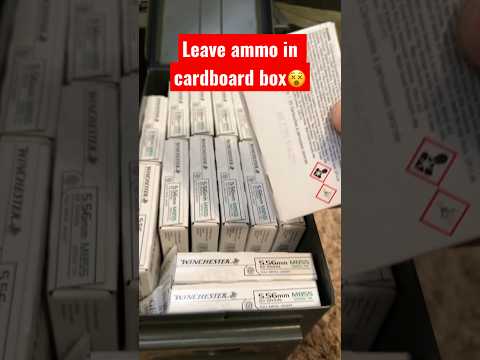
When you buy bulk ammo, the oldest boxes should always sit at the front of your shelf, not the back. Make it a habit to pull from 6.5 Creedmoor Ammo for Sale the top or left side of your stash, then restock new purchases behind or below them. This way, you naturally cycle through what you already have before cracking into fresh cases. Rotating your inventory keeps sealants and primers from degrading over years of idle storage. Check dates on the box stamp if you can, but even without them, a simple “first in, first out” rhythm works. The trick is making rotation a routine, not a chore, so you never dig into a decade-old batch by accident. Match this with a quick label marker for purchase month, and your older rounds stay shootable, reliable, and gone before they ever get questionable.
Use older ammo first by restocking new bulk behind old stock, keeping every round Rimfire Ammo for Sale fresh and functional for years.
How to Gauge Your Actual Ammo Consumption Rate Before Stocking Up
Before you sink cash into bulk ammo, track your actual burn for six to eight weeks, not your hopeful range fantasies. Log every trip: the box of 50 you finish plinking, the 20 rounds zeroing, the 40 in a class. Divide total rounds by weeks—that’s your true weekly rate. Your real consumption is what survives a busy month, not a lazy one. Then multiply by 12 to see what bulk actually covers. If you shoot 100 rounds a week, a 1,000-round case lasts ten weeks—not “forever.” Don’t forget dry-fire doesn’t count, and malfunctions eat live ammo during practice.
Bulk buying tempts you to shoot faster, so re-measure after the first case
—your rate rises once the pile is deep, and that changes how much you stock next time.
Tracking Your Monthly Range Visits and Round Counts Accurately
Accurately gauging consumption begins with logging each range session 6.5 PRC Ammo for Sale in a dedicated notebook or spreadsheet, noting the date, firearm, and exact rounds fired. Do not rely on memory; instead, count boxes before leaving, then subtract the remaining box weight or count after shooting. For tracking monthly range visits and round counts accurately, follow this sequence:
- Record every visit immediately, including dry-fire sessions that consume no ammo.
- Separate counts by caliber and purpose, such as practice versus drills.
- At month’s end, sum per-caliber totals and divide by the number of range trips to derive your average per-visit burn.
This per-caliber monthly average becomes the baseline for bulk purchases, ensuring you buy enough to cover three to six months without overstocking based on guesswork.
Factor in Dry-Fire Practice and Backup Reserves for Emergencies
Your live-fire consumption rate is only half the equation; dry-fire practice and emergency backup reserves must be factored into your bulk ammo stockpile. Dry-fire drills replace hundreds of live rounds monthly, so subtract that simulated volume from your Rifle Ammo for Sale projected range budget—otherwise, you over-purchase. Conversely, reserve ammunition for power outages or social disruption should sit untouched above your training baseline; calculate one month of defensive loadouts plus 500 rounds per firearm as a dedicated emergency layer. Track fire, and you see that dry practice shrinks your total needed, while the reserve inflates it. Net result: your true bulk order equals live-fire average minus dry reps, plus a hard-coded emergency floor. The table clarifies the split:
| Component | Adjustment to Bulk Order |
|---|---|
| Dry-fire substitution | Reduce by 10–30% of weekly live rounds |
| Emergency reserve | Add fixed 1–2 month defensive supply |
| Combined factor | Net stockpile divided into training vs. locked reserve |
Choosing the Right Box Count—500, 1,000, or More—for Your Habits
To select between 500, 1,000, or more rounds, first calculate your average rounds expended per range session—not your optimistic “ideal” count. If you fire 150 rounds weekly for drills and 50 for zeroing, a 500-round case covers roughly 2.5 sessions, forcing reorders that break training rhythm. A 1,000-round case aligns with a monthly cadence, reducing per-session cost while remaining manageable to store. However, if you shoot bi-weekly or run high-volume courses exceeding 300 rounds per outing, 1,000 rounds vanish in three trips; then a 2,000-round case (or multiple 1,000s) becomes your baseline. Match the box count to your slowest consumption month, not the fastest, ensuring you never dip below a 30-day buffer. Choosing the right box count hinges on your recurring session volume, not one-time sprees.
Opt for 500 rounds if you shoot under 200 monthly; 1,000 for steady weekly practice; 2,000+ only when your session count exceeds 300 rounds or you train monthly without restocking.

Common Pitfalls First-Time Bulk Buyers Face and How to Avoid Them
First-time bulk ammo buyers often overlook caliber consistency, grabbing a great deal on 5.56 NATO when their rifle is chambered for .223 Remington, risking dangerous pressure spikes. Avoid this by triple-checking headstamps and box labels before purchase. Another common pitfall is ignoring storage conditions; buying 2,000 rounds and tossing them in a damp garage ruins primers and powder within months. Invest in sealed ammo cans with desiccant packs, and rotate your stock by shooting the oldest lot first. Also, don’t assume bulk equals cheap—calculate cost-per-round including shipping and tax, since heavy crates can erase savings. Finally, resist buying obscure brands solely for price; test a single box first for reliability in your firearm, as feeding issues become painfully amplified at scale.
The Risk of Buying Unfamiliar Brands Just for the Low Price
Snagging a mystery box of ammo purely because the per-round 7mm WSM Ammo for Sale price looks insane is a classic trap. That unfamiliar brand might use inconsistent powder charges or soft primers, leading to frustrating misfeeds or duds that ruin your range day. More importantly, cheap unfamiliar bulk ammo can cause real reliability issues in your specific firearm, which no discount justifies. You could also be stuck with corrosive or poorly sealed rounds that damage your barrel over time. *One bad lot of bargain ammo can easily erase any savings through wasted range time and potential gun repairs.* Stick to known, reputable manufacturers when buying in bulk—your gun and your shooting experience will thank you.
Why You Should Test a Small Batch First Before Ordering in Mass
Before committing to a bulk ammo purchase, you must validate that the round functions flawlessly in your specific firearm. A small batch test reveals potential cycling issues, feeding failures, or accuracy inconsistencies that only emerge under live fire. Mass-ordering ammunition you have never tested locks you into thousands of rounds that may jam, keyhole, or produce erratic groups. Testing a box of fifty lets you chronograph velocity, inspect primer strikes, and check for excessive fouling—all without financial exposure. If the batch passes, you buy confidently; if it fails, you lose under $20 instead of hundreds. This single step separates smart bulk buying from costly regret.
Checking for Squib Loads and Misfires When You Finally Open a Bulk Case
When you finally open a bulk case, checking for squib loads and misfires must be your first quality-control ritual. Unlike factory boxed ammo, bulk lots can hide inconsistent primers or powder charges. Before firing, physically inspect each cartridge’s primer for deep strikes or, conversely, a raised primer that signals a high pressure sign. During your range session, treat every light “pop” or click as a potential squib: immediately stop firing, clear the chamber, and run a cleaning rod down the barrel from the muzzle to confirm the bore is clear. Do not simply eject the round and keep shooting. For efficiency, use this sequence:
- Visually sort rounds, setting aside any with loose bullets, cracked cases, or suspicious primers.
- Load one magazine and fire slowly, listening for a normal “bang” versus a weak report.
- After each shot, check the target for a bullet hole, not just the action cycling.
- If a misfire occurs, hold the firearm downrange for 30 seconds before opening the action.
A single overlooked squib can bulge your barrel, but rigorous checking ensures your bulk investment remains safe to finish.